Catapults

New project to cut e-waste by designing recyclable power electronics

Date: 03.02.2026

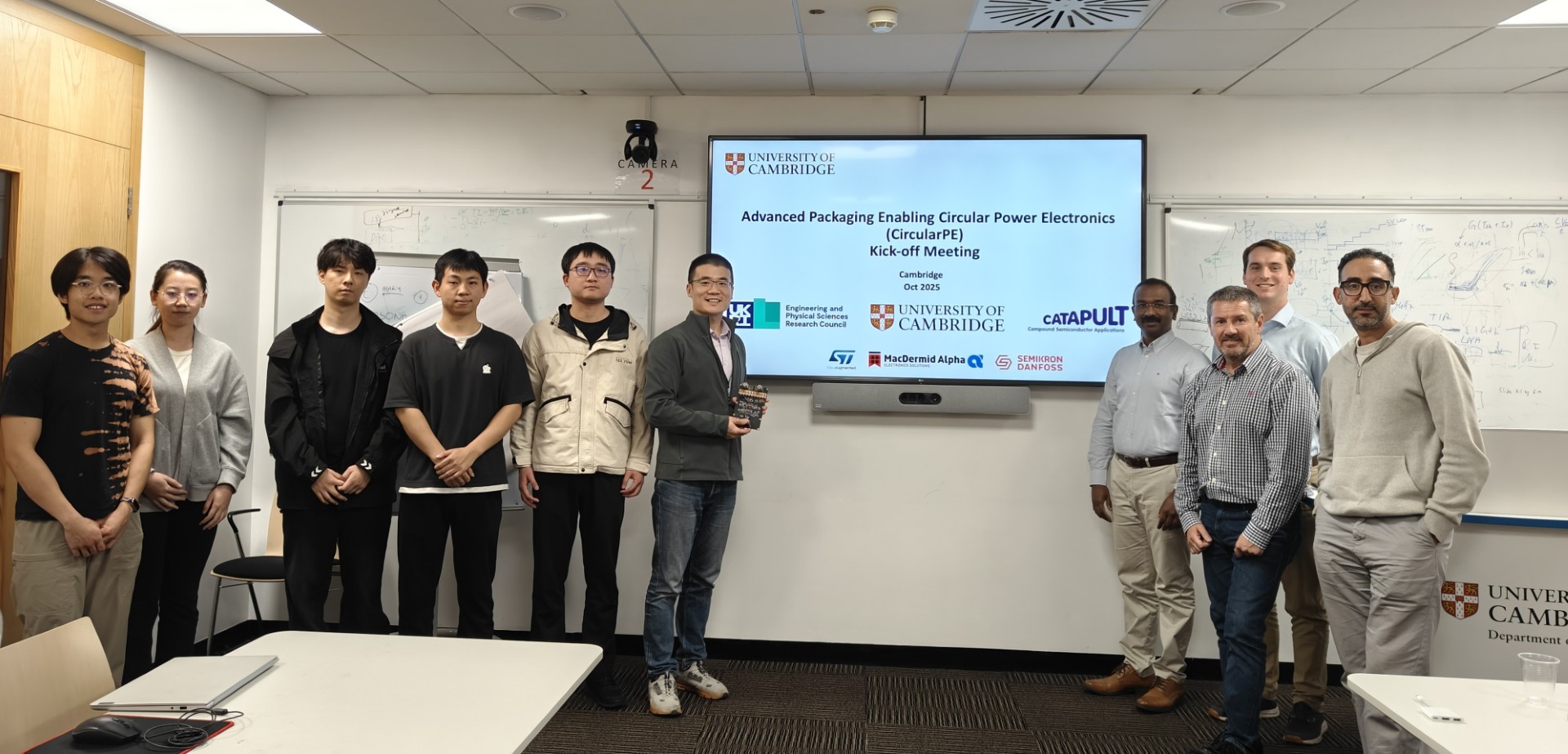
A group stands in a classroom beside a screen displaying an e-learning University of Cambridge project title. - CSA Catapult
Abstract swirling shapes in shades of purple and brown form smooth, fluid lines with an elegant, flowing curve. - CSA Catapult

This innovation comes at a critical time. Around 74 million tonnes of electronic waste are discarded globally every year – the equivalent of every person on the planet throwing away around 50 smartphones annually. That waste contains more than £40 billion worth of recoverable materials, most of which is never reclaimed.

As electrification accelerates across sectors such as energy, transport and industry, the volume of power electronics in use is rising sharply – yet these systems are not always designed with repair, reuse or recycling in mind.

When components fail or performance drops, entire units are often scrapped, turning valuable materials into waste and driving unnecessary environmental impact. By rethinking how power electronics are packaged and assembled, the project aims to change that trajectory.

Alongside the liquid metal innovation, the team is developing a modular “standard cell” approach to power electronics design. This would allow common building blocks to be deployed across multiple applications, extending product lifetimes, simplifying repair, and reducing waste at scale.

The project brings together the University of Cambridge and Compound Semiconductor Applications (CSA) Catapult, combining academic research with practical engineering and manufacturing expertise. Working closely with industry partners, the collaboration is focused on translating new ideas into scalable, real-world technology that can be adopted by UK businesses.

A green leaf lies on a purple circuit board, symbolizing the fusion of technology, nature, and e-solutions. - CSA Catapult

“Power electronics underpin almost every piece of low-carbon technology. Yet they’re rarely designed with end-of-life in mind. Our hope with this project is that we can support and inspire UK businesses in our industry to adopt circular design principles, without compromising on performance.

“By designing electronics with foundations that are built to last, be repaired and reused, we can demonstrate ways to meaningfully cut waste at scale, with huge benefits to the environment, while at the same time strengthening the UK’s power electronics supply chain.”

Dr Jayakrishnan Chandrappan, Co-Investigator on the project and Head of Packaging at CSA Catapult

“Our vision is to create power electronics that are not only efficient and powerful but also designed to live multiple lives. This EPSRC support enables us to explore a truly circular approach – one that integrates high performance with environmental responsibility.”

Professor Teng Long, Principal Investigator on the project from the University of Cambridge